
A clear starting point for leadership and team development
Fourfold Leadership programs are modular and scalable. Most teams begin with a focused engagement, then grow from there.
If you know what you need: choose a service.
If you are still naming the issue: start with a diagnostic.
DIAGNOSTIC ENTRY POINTS
Diagnostic Debrief
A 30-minute session to review your result, name the likely friction, and identify the next practical move.
Team Diagnostic Session
Run one diagnostic across a leadership team, review the combined pattern, and turn the results into practical agreements.
Best when the issue is real, but the starting point is not yet obvious.
How engagements typically begin
Most of our work starts with a single, well-designed session.
This gives teams a shared language, practical insight, and immediate clarity around how people work together. A focused engagement is usually a workshop or leadership session designed around a real team challenge.
From there, leaders decide what support makes sense next, if any. There is no pressure to commit beyond the first step. Our role is to help you move forward with confidence.
Why we often start with DiSC
Teams rarely struggle because they lack values, strategy, or effort.
Challenges arise when everyday behaviour under pressure is misread, misinterpreted, or taken personally. DiSC is a highly validated workplace behavioural assessment that gives leaders and teams a shared, neutral language to understand behaviour as patterns rather than intent. This clarity reduces friction, supports better judgment, and makes difficult conversations more productive.
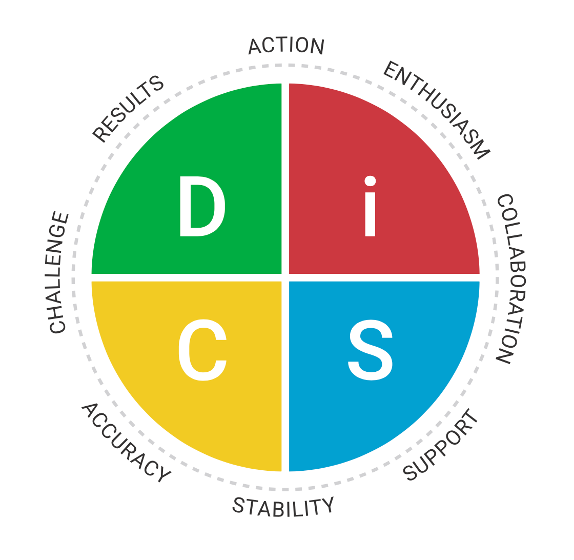
Our services are organized into three engagement levels. Each level builds on the last, allowing teams to start where they are and progress as their needs evolve.
You can begin at any level, though most teams start with the 100 level. The three engagement levels build on the same behavioural foundation, moving from awareness to application to alignment.
A tiered approach to leadership and team development
QUICK NAVIGATION
🟢 100
100 Level
Fundamentals of DiSC
This is the foundation. Fundamentals of DiSC gives teams a shared, practical language to understand behaviour, communication styles, and working preferences. It creates clarity quickly and helps reduce friction in day-to-day interactions.
DiSC assessments
Facilitated team workshop
Practical tools teams can use immediately
Best for: teams
Shared language
Typical investment range: high-four to low-five figures
Final scope depends on team size and delivery format
Immediate clarity
🟠 200
200 Level
Behavioural agility and management
Once teams share a common language, the focus shifts to application. This level helps team leads and managers adapt their behaviour, navigate tension, and lead more effectively in real situations. It is especially valuable for new managers, growing teams, and organizations navigating change.
Applying DiSC to everyday leadership conversations
Agile EQ to build emotional and behavioural flexibility
Practical manager tools that hold up under pressure
Agile EQ
Management development
Typical investment range: Low to Mid-five figures
Often delivered as a multi-session engagement
Real situations
🔴 300
300 Level
Work of Leaders and executive cohesion
This level supports senior leaders and leadership teams. The focus is on alignment, decision-making, and clarity at the top of the organization. Engagements are typically more strategic and often form part of a longer-term leadership journey.
Leadership team alignment and shared direction
Decision discipline and execution clarity
Culture shaping through leadership behaviour
Senior leaders
Strategy and alignment
Typical investment range: five figures and above
Designed as a strategic or ongoing leadership engagement
Leadership team cohesion
SPECIFIC STARTING POINTS
Start with the outcome you need.
Some teams already know the capability they need to build. These focused entry points bring together the right Fourfold frameworks, behavioural tools, and facilitation around a specific leadership outcome.
Everything DiSC Workshops
Build shared behavioural language, strengthen communication, and choose the right DiSC application for your team, managers, or executives.
Leadership Development for Growing Companies
Develop managers and leadership teams whose habits, judgment, and operating rhythms can carry the company's next stage.
Executive Team Alignment Workshop
Clarify priorities, tradeoffs, decision rights, and ownership so leadership-team agreement survives outside the room.
AI Thinking for Leaders
Help executives use AI to clarify problems, challenge assumptions, and improve decisions while keeping judgment and accountability human.
Not sure what the real problem is yet?
Most leadership friction gets mislabeled. Communication issues may be clarity issues. Accountability issues may be ownership issues. Culture issues may be drift. Capacity issues may be time, energy, or attention leakage.
Start with a short diagnostic. You’ll receive a practical result, a PDF summary, and the option to book a debrief or bring the team’s data into a facilitated session.
What happens after the first engagement
After an initial workshop or engagement, many teams choose to continue the work. This might include follow-up sessions, leadership coaching, or short-term support to help ideas translate into action.
In many cases, we offer complimentary check-ins or targeted recommendations based on what we observed. The goal is always the same: support momentum without overcomplicating the path forward.
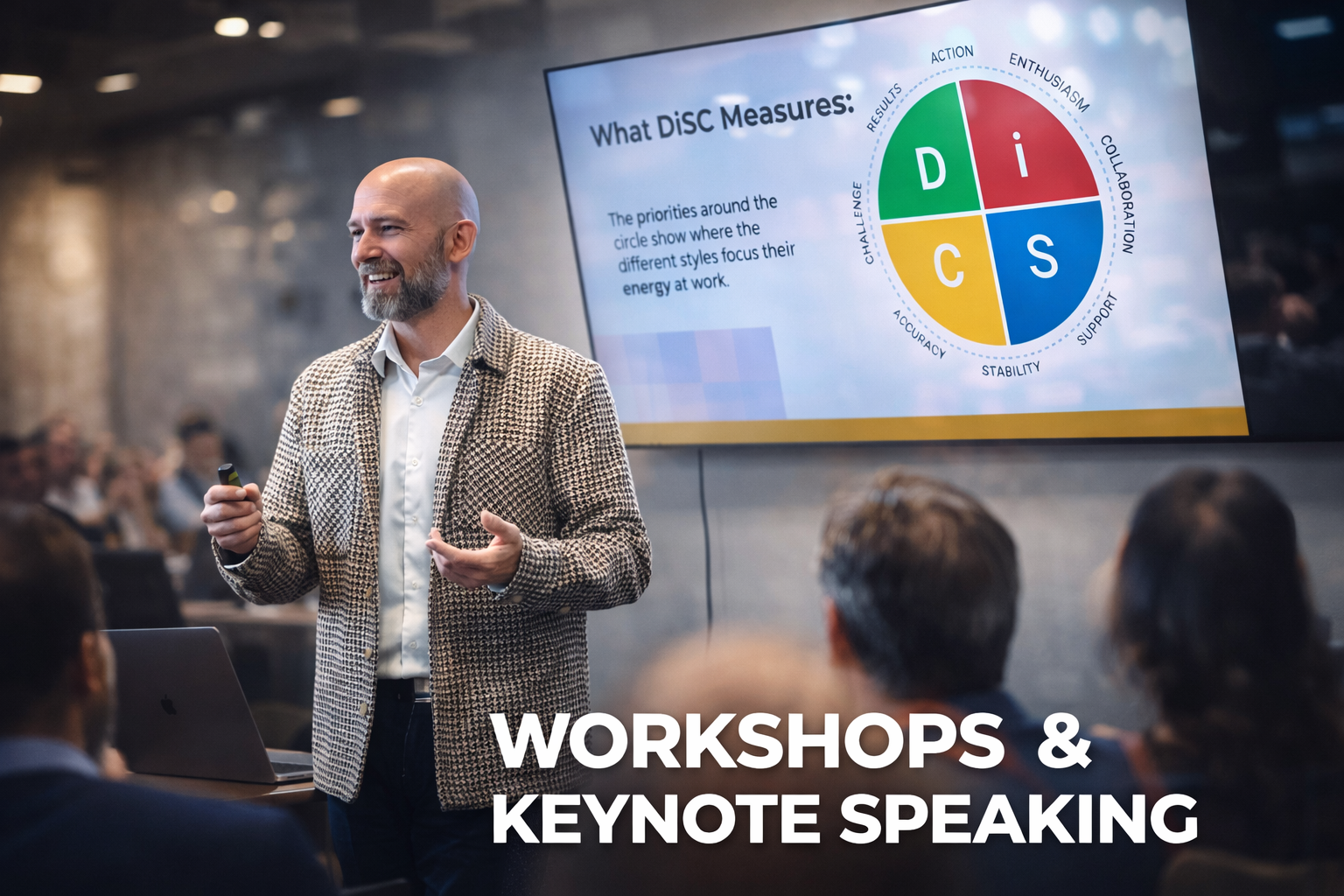
DiSC is a primary tool we use because it consistently works across teams, managers, and executive groups in real organizational conditions.
Next Steps
If you are exploring leadership or team development, the best place to start is a conversation.
Better • Faster • Aligned